Getting Organised
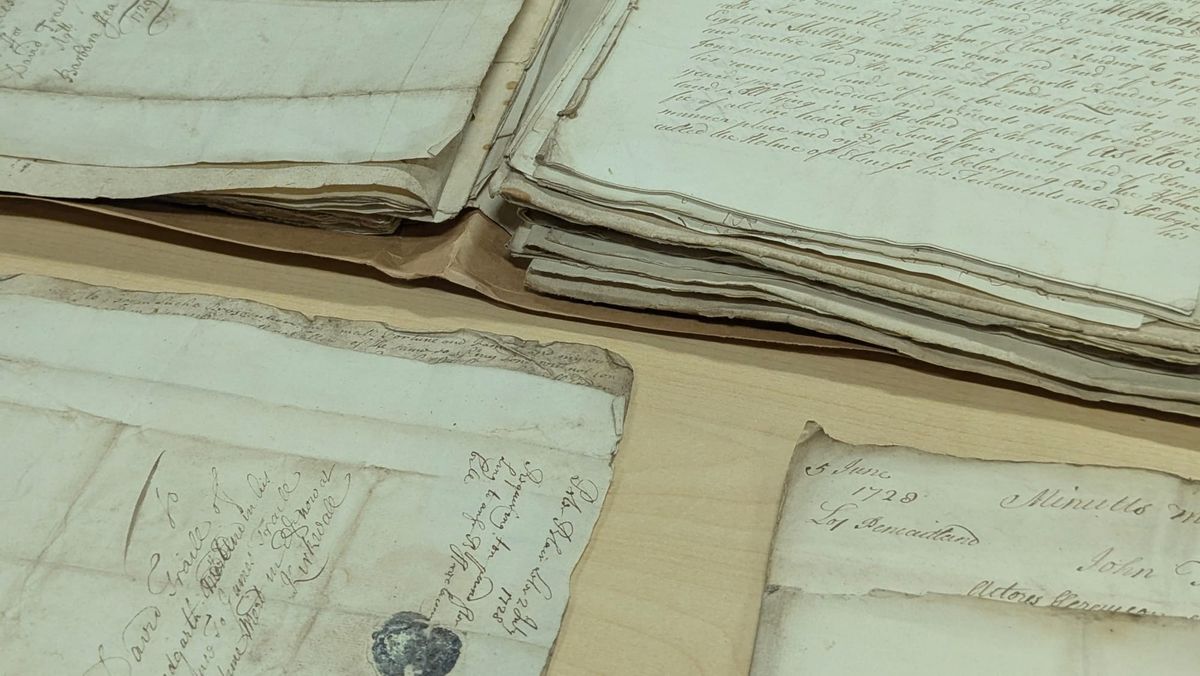
I've mentioned before that one of the greatest challenges I face with this book is that I'm approaching it without a background in history, so I'm having to figure out how to make sense of the vast array of documents in the archive rooms in Kirkwall. I've never been someone who is methodical, but I am exceptionally stubborn, so I'm approaching the point when I'll have not only read every book that covers the story of Barbara Fea, but I'll have gone through almost all of the documents held in the archive and I'll have transcribed a substantial number of key items.
After transcribing about 30,000 words of court rolls and letters, I'm now at the point where it's more like copy-typing than it resembles learning a new language. I've got a sense of the voices of each of the main players in the long legal saga and I'm starting to get a feel for how their characters change with age. I've found myself with unexpected sympathy for some people who I thought were monsters when I first encountered them, like the stubborn old John Traill who refuses to yield to Barbara, no matter the court rulings or the cost. Other characters who I saw as victims of collateral damage have turned into awful, frightening figures.
At first, I'd seen Patrick Traill's younger brother David as a victim in the story, left looking after the family business and the awful task of protecting it from the chaos when his brother disappeared. Now, I'm finding that I think Barbara Fea was right when she called him a "base Thief, a Robber and Murtherous Rascal."
Co-ordinating all of this evidence has left me feeling like my lockdown quest to read an implausible number of Agatha Christie stories has begun to pay off. I still infuriate the archivists when I forget which of the 50+ dossiers I've looked at, especially when each one has dozens, if not hundreds of items in them. I still rely very heavily on the catalogue of photos I take with my phone when I go in there, but I'm getting better at organising my transcripts and texts into Scrivener, an app my husband recommended for research based writing and I'm keeping better records of the books I've read, even though I still remember general gists instead of quotes.
I've started to realise that I'll soon be at a point where I'll have read more about this case than anyone alive, and maybe anyone in the last century. When I'm opening court records that the archivists tell me nobody has opened for centuries, that's a very peculiar feeling.
I mean, I could go on and on with learning everything there is to know about this period in politics, in costume, in philosophy and in economics, but all of that just comes from some fear that I'll never quite have enough knowledge or enough expertise to be certain of what I'm writing. And that's paralysing.
One of the oddest things is realising that I have to be a little careful about sharing every discovery so some other writer, less inhibited by care, can't take my work and claim all the credit. This book is mine, and with every fibre of myself, I need to write it.
I have only a couple of things I really want to check, and I want to make a visit to some of the locations where all of this takes place, but at some point, I have to take off the stabilisers and trust the hill I've built to carry everyone along for the ride.
I think we're just about ready to roll.