Writing to Remember and be Remembered
I've started the Granta Nature Writing course, which is full of prompts and promise. The first week's task was to respond to a prompt which asked a series of questions that could be summed up as: Why do you write? The word limit was more of a helpful challenge than I'd expected.
This was my answer.
When I read about Orkney, there are two parallel canons. Frankenstein paints a wild unknown, the feral folk of islands yet to be whipped to the heel of civilisation. Archaeological reports that imagine a people bound by magic and stone. The Orkney of the visitor, of the witnessing. In that, there’s as often insult as insight, but there’s a lesson in seeing how we are seen by others. How writers see first the broad skies, the lands and creatures and, with time, the crofting farmers and other folk who come into focus, from backdrop to motif to metaphor and, eventually to people. Perhaps even friends.
Then, there’s the writing from within: the folk tales told to Traill Dennison, echoed now to a modern ear by Ernest and Hugh Marwick and, now Tom Muir. The dialect tales of Christine Costie, who, in the 1950s, grasped that voices and stories were not a thing to be corrected away in English lessons, but held profound lessons of their own. The work of Gregor Lamb to chart how Orcadian speakers knew the landscape by names known to the Norn of the Vikings and before. The poetry of Robert Rendall, so clumsy in English but so alive in dialect, and the glorious Reminiscences of an Orkney Parish by John Firth, meticulously marking the everyday manner of pre-industrial survival. The cutesy beauty of George Mackay Brown. The music of Sir Peter Maxwell Davies, in whose house I live.
It’s into that literary landscape that contemporary writers wander. The ones who leave and remember, like Josephine Giles and those who return and react, like Amy Liptrot. All writers who encounter Orkney have to contend with nature. It encompasses us. It forces us to retreat into our houses. It surrounds us with the deadly swell of the churning sea, gets blood on our hands and mud under our nails, just as the London Underground blackens the nostrils of its millions of passengers.
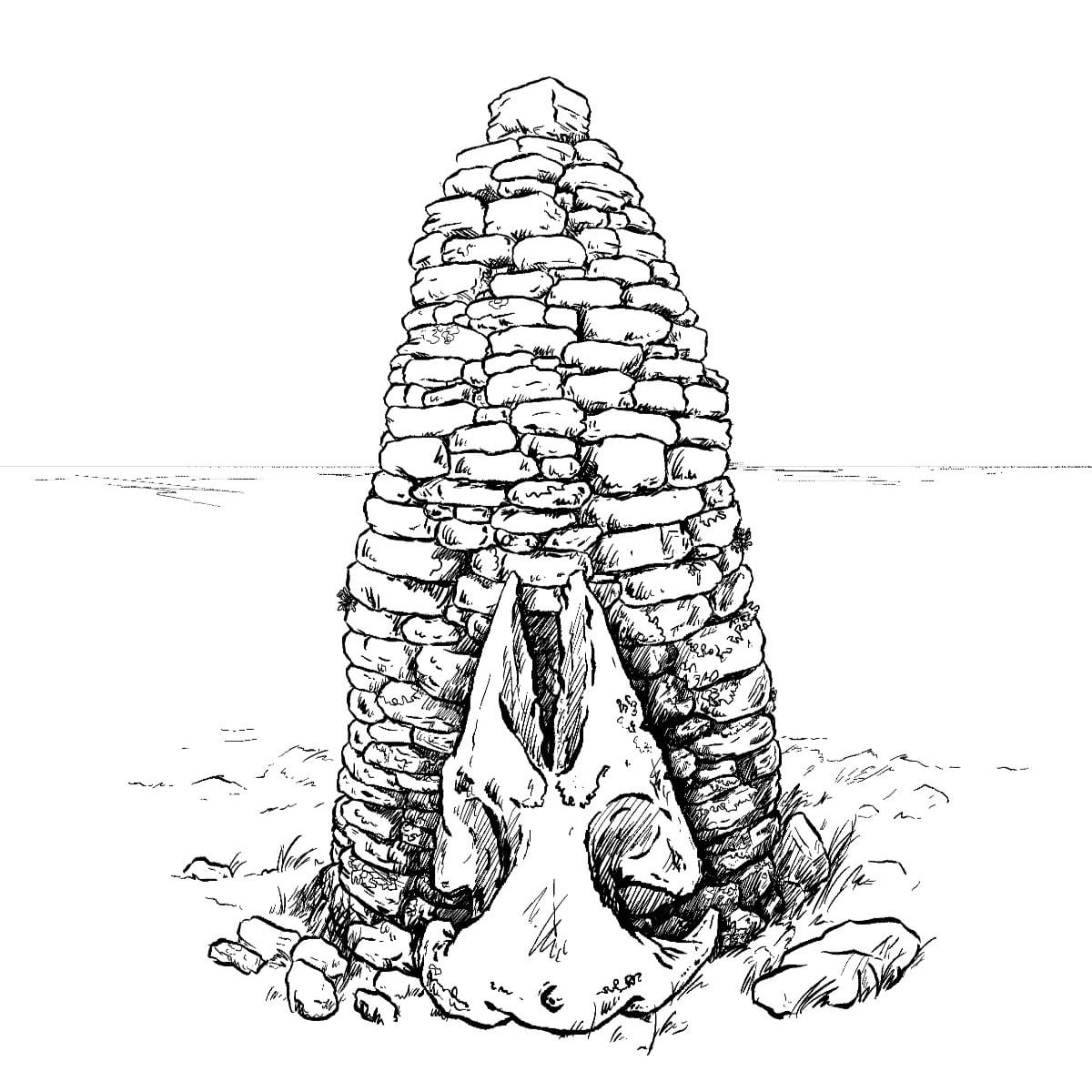
To reflect on what nature writing means to me and what draws me into it, I feel it overlaps with why I loved learning to build and maintain the dykes on the island. To feel the softness of red and yellow sandstone; the weight of blue winn smoothed by shore and wind as I slot and pin them in and pack the heart behind them, bracing them to face storms I won’t live to see, hoping some other hands will pick them up, tut at my mistakes and replace them with care.
I write and live beneath the shadow of an illness that could make abrupt my switch from living on the island to becoming it.
We navigate and maybe chart a world tide-worn and storm-tossed, marking, with fondness and horror, its dissolving form. Listening to words for the earth itself – clett, howe, geo, sharn, stoor and gutter – heard in voices also smoothed away and lost. To find anchor in a changing world; both embracing the future and how that future was formed.
If you'd like to support my writing, please do subscribe to this blog and consider making a donation to help with research and running costs:
Glossary:
Dyke - a field boundary, whether turf, rubble, ditch or, as I work with, dry-stone wall
Winn - general term for dark grey, dense stone with a grey sheen.
Clett - a hillock, often with protruding rock
Howe - a mound where farms stood on the ruins of farms
Geo - a cleft in the rocky shore
Sharn - cattle manure, or the mud from a farm cesspit
Stoor - dust, or muck
Gutter - slippery, puddly mud